
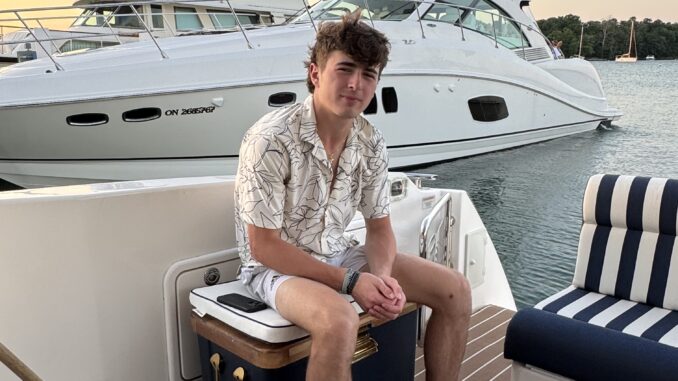
For Detroit-area artist Max Jurcisin, professionally known as Big Mig, pursuing a career in rap wasn’t part of the original plan. Music had already occupied an important place in his life, but for years his creativity existed behind the decks rather than behind a microphone. What began as a passion for DJing would eventually become a demanding chapter of his life, one that ultimately pushed him toward discovering an entirely different way to express himself.
During high school, Big Mig became deeply committed to creating mixes. It wasn’t simply a hobby. He viewed DJing as his future and invested so much of himself into perfecting his work that other areas of his life began taking a back seat. School became difficult to focus on, time with family became limited, and the pressure he placed on himself continued to grow.
His desire to create mixes that audiences would enjoy gradually became connected to stress, anxiety and periods of depression. By his senior year, Big Mig began recognizing that the career he once imagined for himself wasn’t necessarily the life he wanted anymore.
During his first semester of college, he created one final mix for his fraternity. He then made a promise to his friends and family that his days of pursuing DJing were over.
What Big Mig didn’t realize at the time was that he wasn’t leaving music behind. He was simply changing his relationship with it.
College introduced him to a circle of friends who had already been pursuing rap since their earlier school years. Artists Meltdog, Manban, Sethman, Brummy and Mefford became part of an environment that reopened Big Mig’s creative curiosity.
He had experimented with writing before, including an early throwaway diss track during high school, but becoming an actual recording artist hadn’t seemed like a realistic direction. Being surrounded by friends who were creating their own music changed his perspective.
The name Big Mig began to represent something different.
Encouraged by the people around him, he started seriously exploring songwriting and recording. That experimentation eventually resulted in his first album, A Family Reunion, a project that helped confirm that he had found a new place within music.
Rap provided something DJing couldn’t: the opportunity to communicate directly.
Instead of relying on mixes to create an emotional response, Big Mig could put his own experiences, thoughts and messages into lyrics. The microphone allowed him to speak about the parts of his life that listeners may never have understood from his earlier work.
That ability to communicate has become central to his artistic direction.
Big Mig has written about mental health, the pressure he experienced during high school and the identity he once attempted to create for himself instead of simply accepting who he was. Those experiences now provide material for music that can be personal without losing its ability to connect with listeners.
Becoming comfortable as a rapper didn’t happen immediately. Big Mig had never developed himself as a traditional vocalist, so he had to discover which tone naturally worked for him, which flows complemented his voice and where his strengths and weaknesses existed as a songwriter.
That process required patience.
Once his flow began falling into place, however, Big Mig became increasingly confident that he had found the musical path he had been looking for.
His Metro Detroit background has also played an important role in shaping that development.
Growing up near a city with one of hip-hop’s most recognizable musical identities gave Big Mig examples of what persistence and originality could produce. Eminem stands as one of his biggest inspirations, particularly because of the level of lyricism and storytelling associated with his music. Big Mig also recognizes artists including 42 Dugg, Tee Grizzley and BabyTron as part of the Detroit-area rap culture that continues influencing new generations of artists.
Watching artists emerge from difficult circumstances has become motivation for Big Mig to continue working even when the creative process becomes challenging. Whether that means writing when inspiration isn’t immediately there or recording when he’s tired, he understands that building something meaningful requires consistency.
That work ethic is also reflected in the type of artist Big Mig wants to become.
He isn’t interested in giving listeners the same version of himself on every record. Some songs are designed to hit hard through the speakers, while others are more melodic, reflective and personal. His objective is to create a catalog that feels like listeners are watching different chapters of his life unfold.
Versatility and authenticity are becoming two of the most important elements of the Big Mig identity.
Rather than chasing whatever sound happens to be popular at the moment, he wants each project to possess its own character. Detroit will remain part of his foundation, but his ambitions extend beyond his hometown. Big Mig wants to create music capable of connecting with listeners regardless of where they live.
The transition has also changed how he views the sacrifices associated with pursuing music.
Late nights, missed opportunities to go out and long hours devoted to creating aren’t necessarily negatives to him anymore. They’re part of choosing something he genuinely enjoys. Having friends around him who share that same passion has also created a healthier creative environment, where artists can provide feedback, challenge one another and grow together.
At the center of Big Mig’s journey is a message about pursuing something even when other people don’t understand the vision.
He knows there are friends and people from home who believe building a meaningful career in music may be impossible. Big Mig doesn’t view their doubt as a reason to quit.
Instead, he has adopted a phrase that represents his approach to what’s ahead:
“Impossible? Let’s find out.”
That mentality will carry into his upcoming album, Forbidden Eras, currently planned for release in 2027.
The project will revisit the culture surrounding Big Mig during his high school years, including the internal battles and negative voices he experienced while trying to navigate music and his own identity. Rather than allowing those experiences to remain something he simply wants to forget, Big Mig plans to transform them into part of his story.
The message behind that story is bigger than proving whether one artist can succeed.
Big Mig wants people to recognize that life is too short to spend it pursuing things that bring no fulfillment. Whether someone’s passion is music, sports, art or something completely different, his belief is that discovering what could happen is better than allowing fear or other people’s opinions to make the decision.
Big Mig has already learned that changing direction doesn’t necessarily mean giving up.
Sometimes it means finally finding the right direction.
His DJ chapter gave him an ear for music, discipline and an understanding of how listeners respond to sound. His experiences during difficult periods gave him something meaningful to write about. His friends helped create an environment where he could discover his voice.
Now Big Mig is bringing all of those pieces together.
From making mixes during high school to developing his own albums and preparing Forbidden Eras, his journey has become less about trying to be perfect and more about being authentic.
For Big Mig, the question is no longer whether becoming an artist seems impossible.
He’s decided to find out for himself.
Listen to Big Mig on Spotify:




Leave a Reply