
Written by Jonathan P. Wright on behalf of ONEWEST Magazine.
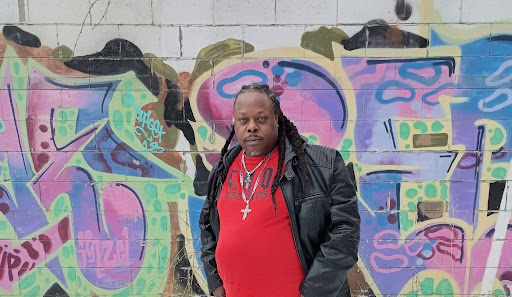
Pain has a different sound when an artist stops performing and starts telling the truth. DERANGE DA MESSIAH does not approach “Paranoia” like a standard Hip-Hop release. He approaches the record like a man standing in the middle of his own history, surrounded by pressure, memory, survival, and the kind of cultural awareness that cannot be faked inside a recording booth. “Paranoia” feels personal before it feels musical. Every bar carries the sense of someone who has been watching life long enough to understand that fear, for Black people in America, is not always emotional weakness. Sometimes fear is information. Sometimes fear is history talking back.
A Voice Carved From Arkansas Roots And Lansing Concrete
Born in Blytheville, Arkansas and raised in Lansing, Michigan, DERANGE DA MESSIAH carries a story with real geographical weight. His official history speaks to an artist who began rapping at 14, developing his voice across years of lived experience, independent grind, and personal transformation. Arkansas gave him origin. Lansing gave him armor. Somewhere between those two places, his voice became something heavier than delivery. It became a vessel for survival.
Raised inside the kind of reality that forces a young Black man to mature before the world gives him permission to breathe, DERANGE DA MESSIAH built his artistry from more than ambition. His music carries the residue of observation. His tone feels like somebody who has seen systems work exactly as designed. His cadence moves with the urgency of a man who understands that time, freedom, and opportunity are not guaranteed equally to everybody.
Beyond the microphone, his story includes ownership and self-determination. Known also as ThaHookPreceptor, DERANGE DA MESSIAH has operated as CEO of Cash Me Out Records while also being connected to Iced Out Records and High Risk Entertainment. Performance history connected to Corey Gunz of Young Money and Cash Money, along with Body Head Banger Entertainment tied to Roy Jones Jr., adds another layer to his journey. Fame was never the only goal. Movement, identity, and control have always been part of the architecture.
“Paranoia” Feels Like A Black Man Reading The Room Before The Room Turns Against Him
“Paranoia” carries its title with purpose. Many artists use fear as an aesthetic, but DERANGE DA MESSIAH treats paranoia like a lived condition shaped by environment, history, and cultural memory. His lyrics speak directly into the struggles of humanity within African American culture, and the record does not flinch while doing it. Clarity sits inside the aggression. Transparency sits inside the pain. Raw authenticity rises through the record in a way that feels rare during an era where so much music gets polished until the truth disappears.
Across the song, references connected to prison pipelines, modern-day slavery, labor exploitation, government design, generational trauma, and broken trust become more than lyrical subject matter. They become emotional evidence. DERANGE DA MESSIAH is not guessing at the pressure. He is naming it. He is putting language around the silent calculations Black people often make in real time just to survive a world that studies their pain but rarely honors their humanity.
Paranoia, in his hands, becomes deeper than anxiety. Paranoia becomes the sound of a community remembering what happened before and recognizing the patterns still moving today. His writing feels intimate because he is not speaking from a distance. He sounds like someone who knows the system is not abstract. It has touched families. It has entered neighborhoods. It has shaped choices. It has stolen years. It has made people question what freedom really means when survival still feels negotiated every day.
A 143 BPM Record Running Through Fire With Its Heart Exposed
At 143 BPM, “Paranoia” does not walk. It accelerates. The record moves with the pulse of a man trying to outrun pressure while still turning around long enough to confront it. Speed gives the song tension. Urgency gives it breath. Each section feels like thoughts moving fast through the mind of someone who cannot afford to ignore what he sees.
For DERANGE DA MESSIAH, the tempo becomes both strength and challenge. His message already carries weight, but stronger synchronization between vocal cadence and production could make every line strike with more precision. More breath control would allow the listener to sit with the words instead of chasing them. More melodic shape in key sections could give the record a deeper emotional afterlife.
Nothing about that critique takes away from the power of the record. Refinement simply matters more when the message is important. “Paranoia” deserves to be heard clearly because the content is too meaningful to get lost inside speed. More space, stronger pockets, and sharper vocal sequencing would help the record evolve from urgent to unforgettable.
Heavy Rotation Turns A Personal Record Into A Public Signal
Momentum around “Paranoia” is not limited to one platform. The record is currently in heavy rotation across 99.7 DA HEAT MIAMI, POWER 102.8 Los Angeles, and OpenWav Radio, with all three stations powered by Apple Music Radio. OpenWav Radio is also powered by TuneIn, adding another digital access point for new listeners discovering independent music in real time.
Broadcast repetition matters for a record with this much emotional density. “Paranoia” is not a song designed to be consumed once and forgotten. Some records need to return to the listener multiple times before the full meaning reveals itself. A line may hit differently in the car. Another thought may land harder during a late-night replay. A listener may catch the cultural weight on the third spin because the first listen was spent surviving the energy.
Placement across POWER 102.8 Los Angeles, 99.7 DA HEAT MIAMI, and OpenWav Radio gives DERANGE DA MESSIAH a wider broadcast footprint. Los Angeles gives the record cultural scale. Miami gives it heat and regional motion. OpenWav places it inside a direct-to-fan ecosystem built around ownership and artist control.
Spotify Reveals A Discography That Refuses To Stay In One Lane
Public conversation around DERANGE DA MESSIAH reflects an artist with a vast, robust, and expanding listener audience across Spotify, Apple Music, and other major DSPs. His Spotify presence shows more than activity. It reveals a multi-cultural and multi-lane audience responding to the diversity, range, and mass appeal inside his catalog.
Records like “Ballin’ Nothing,” “Everything Brand New,” “Thank You Jesus,” and “Swerve” speak to different dimensions of his identity. Hunger lives in one song. Faith rises in another. Motion, ambition, reflection, and street-coded survival appear across the catalog in ways that allow listeners from different backgrounds to find their own entry point. “Paranoia” now pushes that connection into a deeper emotional space because the record gives his audience access to the pressure behind the person.
Few independent artists can move across pain, faith, grit, and social commentary without sounding scattered. DERANGE DA MESSIAH carries those layers because they appear connected to real life, not branding strategy. His music can speak to the streets, believers, survivors, hustlers, and listeners who simply respect artists willing to remain human inside a culture often obsessed with image. “Paranoia” strengthens his discography because it gives the catalog a sharper social spine.
Public Perception Already Sees The Rawness Behind The Name
Public-facing media conversation around DERANGE DA MESSIAH has continued to frame his artistry around rawness, independence, betrayal, street legacy, survival, and unapologetic Hip-Hop conviction. Those qualities do not feel assigned to him from the outside. They feel audible. “Paranoia” reinforces them without needing to explain itself too much.
Many artists chase darkness because darkness photographs well. DERANGE DA MESSIAH sounds like he understands darkness because he had to walk through it. His record does not feel obsessed with shock value. It feels concerned with truth. That distinction gives the music integrity. Pain is not being used as decoration. Pain is being translated into testimony.
Modern music culture can be loud, disposable, and emotionally thin. “Paranoia” creates resistance against that climate by bringing depth back into the room. The song makes space for discomfort. It asks the listener to sit inside tension. It challenges people to hear the difference between entertainment and evidence.
OpenWav Places Ownership Directly Beside The Sound
OpenWav Radio brings a deeper business and ownership layer to the story. DERANGE DA MESSIAH already moves with an owner’s mindset, so his presence inside the OpenWav ecosystem feels aligned with his independent foundation. OpenWav Radio is powered by Apple Music Radio and TuneIn, reaching over 5,000 new listeners per week while giving independent artists a broadcast lane designed for awareness, repetition, and cultural momentum.
OpenWav Radio is powered by OpenWav Music, a new direct-to-fan platform built for artists who want control without waiting on outdated industry permission. Artists can create a profile for free, set the price of their music, and send it directly to fans through one universal link with no app needed. For creators, that structure removes friction. For fans, access becomes simple. For artists, ownership becomes immediate.
OpenWav Music also allows artists to launch clothing lines with no money upfront, activate drop shipping across products, and generate revenue from day one while retaining 80% of the profits. That model gives creators more than visibility. It gives them leverage. OpenWav is becoming a new music economy for artists because it connects music, merchandise, fan access, and monetization inside one direct lane.
For DERANGE DA MESSIAH, that ecosystem makes sense because “Paranoia” is already questioning old systems. A record speaking against exploitation belongs inside a platform conversation built around ownership. Alignment between message and monetization matters. OpenWav gives independent artists a way to build without surrendering the very power they are fighting to protect.
Apple Music Radio Expands The Record Beyond A Standard Release
Positioning DERANGE DA MESSIAH across 99.7 DA HEAT MIAMI, POWER 102.8 Los Angeles, and OpenWav Radio, all powered by Apple Music Radio, moves “Paranoia” beyond a standard DSP drop. The record becomes part of a curated broadcast environment where independent music gains context, repetition, and cultural life.
Repetition creates recognition. Recognition creates memory. Memory creates movement. DERANGE DA MESSIAH has a record strong enough to survive repeated listening because every spin has the potential to reveal another layer. The anger is not empty. The pain is not random. The message has roots, and rooted music always has a greater chance of lasting longer than trend-driven content.
Spatial Audio Could Make “Paranoia” Feel Like A Room Closing In
A song called “Paranoia” should feel dimensional. Atmosphere matters because the concept already carries psychological weight. A full Dolby Atmos and Spatial Audio mix could help the record become more immersive, giving the vocals more space, the drums more force, and the background textures a more cinematic presence.
DERANGE DA MESSIAH has the kind of vocal energy that could benefit from depth and separation. Lead vocals need authority. Ad-libs should feel like thoughts circling the room. Low-end pressure should move like tension under the floor. Sonic space could make the listener feel closer to the emotion instead of simply observing it from a distance.
Stronger mixing would not change the truth of “Paranoia.” A better mix would protect the truth. Clarity matters when an artist is speaking about pain this layered. Every word deserves room. Every phrase deserves impact. Every section should feel designed to pull the listener deeper into the mind of the record.
Survival Sounds Different When Purpose Leads The Conversation
DERANGE DA MESSIAH does not sound like an artist chasing a temporary moment. His music feels built from evidence: years of writing, years of recording, years of ownership, years of surviving, years of watching life from angles that many people only discuss from a distance. “Paranoia” becomes powerful because it carries that evidence without overexplaining itself.
Purpose gives the record its center. Even when the rhythm needs tightening, the spirit of the song remains undeniable. Even when melody could strengthen the emotional pull, the truth already stands. “Paranoia” is not perfect, but perfection is not what makes the record matter. Conviction makes it matter. Cultural relevance makes it matter. A voice willing to speak without polishing away the pain makes it matter.
Final Word: DERANGE DA MESSIAH Turns Pressure Into Proof
“Paranoia” carries the sound of a man turning pressure into proof. DERANGE DA MESSIAH speaks with urgency because the subject matter requires urgency. His record carries Black historical weight, human struggle, independent ambition, and a level of transparency that feels deeply personal. Within the song, he does not simply describe survival. He reveals the mental architecture behind it.
Stronger cadence control, more melodic tension, cleaner breath placement, and a fully immersive Dolby Atmos mix could elevate the song into an even more complete cinematic experience. Still, the foundation is already strong. The record has message. The artist has identity. The catalog has range. The broadcast ecosystem gives the music room to move.
DERANGE DA MESSIAH stands at the intersection of testimony and ownership. “Paranoia” proves that his voice can carry discomfort, truth, pain, and purpose without losing its edge. In a world where too much music disappears after the scroll, a record willing to tell the truth still has a chance to stay with people.

Leave a Reply